Hey,
I'm Pascal
Thank you for taking the time to explore my work.
Photography has been a part of my life for as long as I can remember. At the age of 20, I worked part-time as a freelance photographer for three daily newspapers—long before digital cameras and image editing became the norm.
Back then, I headed out with my Nikon F4S and rolls of Kodak T-Max, Ilford FP4, and Ilford HP5, capturing moments on film before spending hours in the darkroom, carefully developing each image by hand.
Making the invisible visible
Today, more than 30 years later, I find myself rediscovering photography through the digital world—combining experience with new creative possibilities. Among these, infrared photography has become a particular fascination.
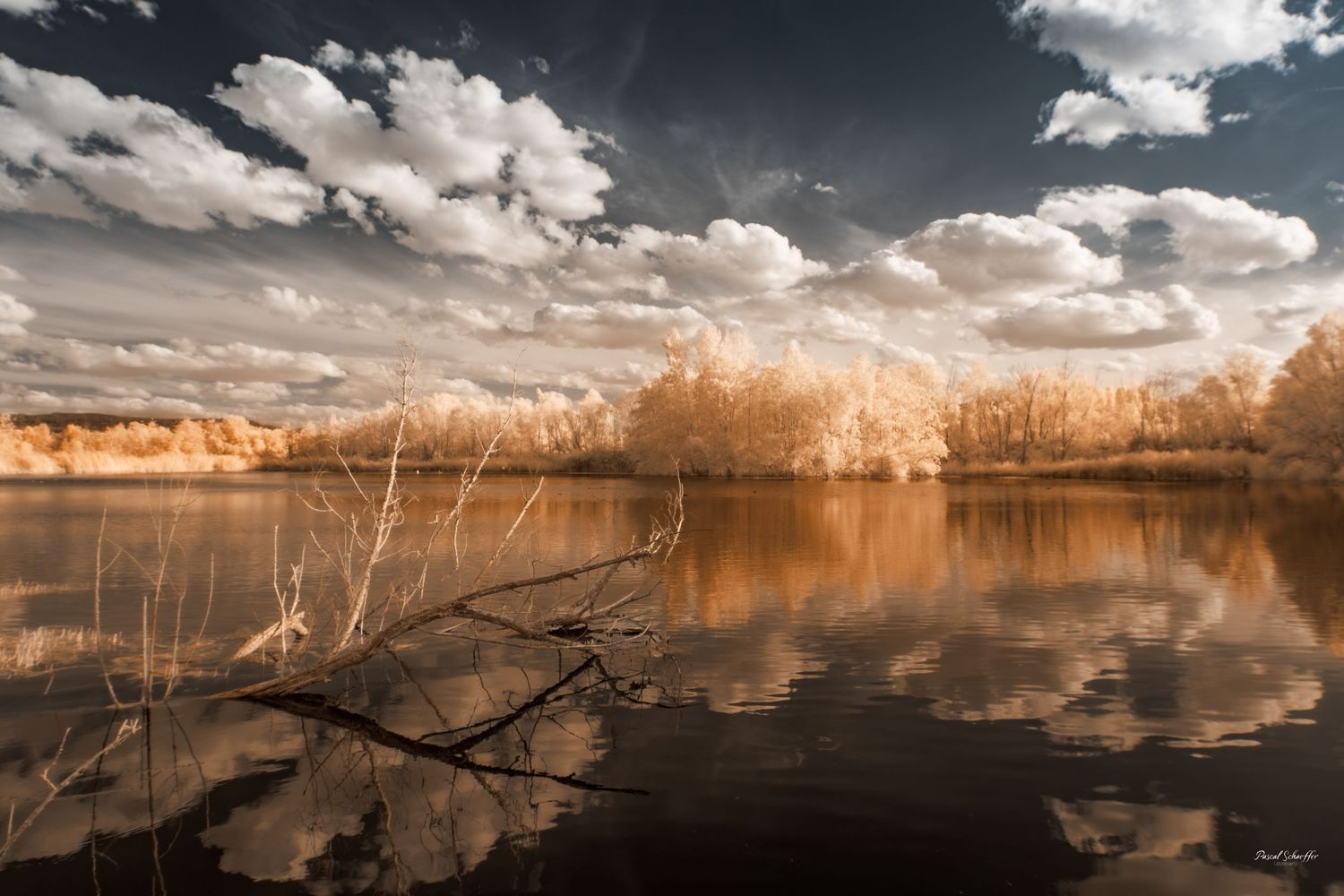
Infrared photography reveals a spectrum of light that remains invisible to the human eye. By capturing wavelengths beyond what we can see, it transforms familiar scenes into something almost surreal: foliage glows in bright, ethereal tones, skies deepen dramatically, and contrasts take on a striking, otherworldly quality. It is not just a different way of seeing, but a different way of interpreting reality—where the ordinary becomes quietly extraordinary.
What's infrared Photography ?
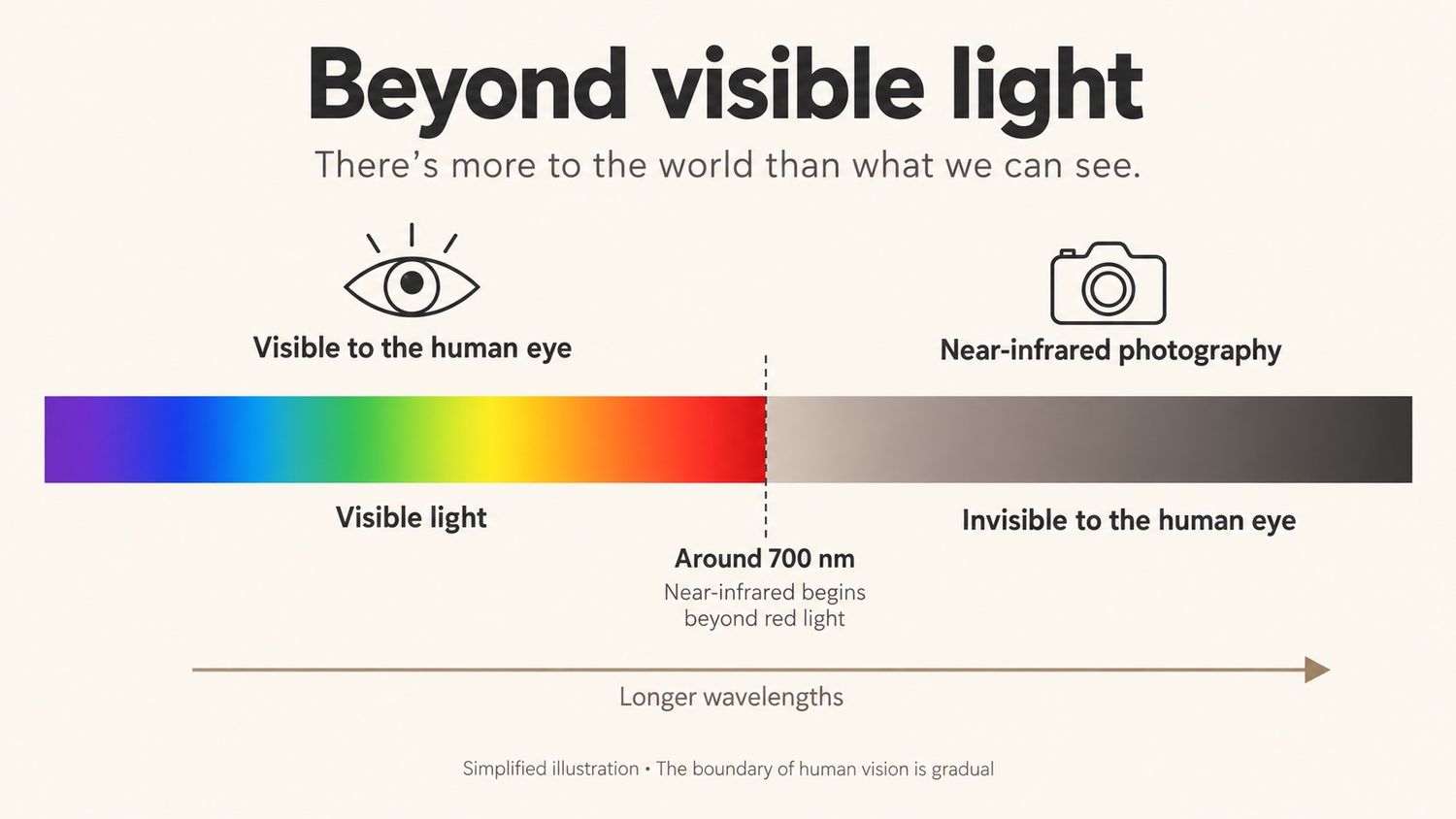
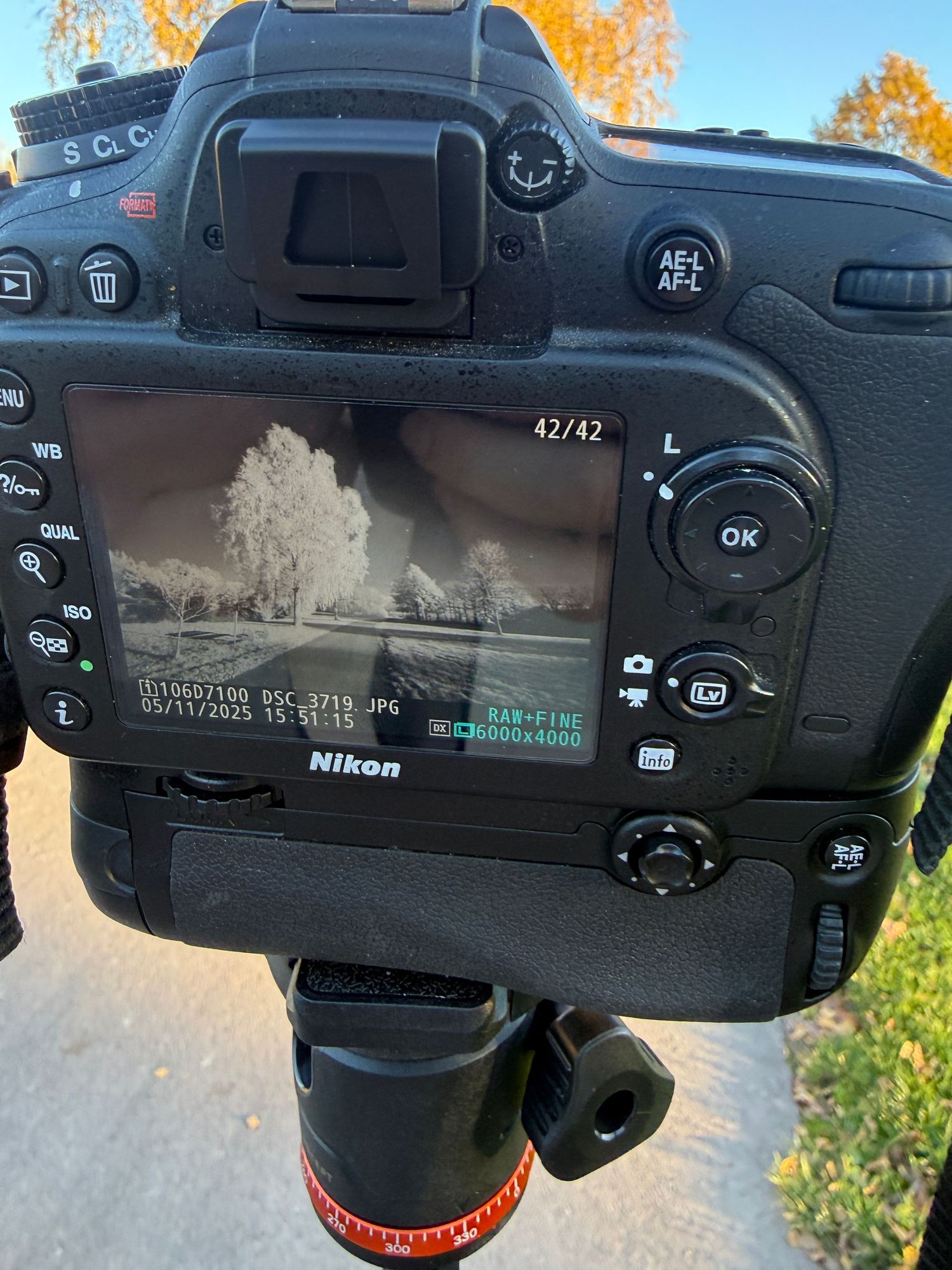
Infrared photography captures light beyond the visible spectrum, typically in wavelengths above 700 nm. Unlike standard photography, which records only visible light, infrared sensors detect this additional range, revealing details and contrasts that are normally hidden.
One of the most characteristic effects is the way vegetation reflects infrared light very strongly, often appearing bright or white, while skies become darker and more dramatic. This creates a unique contrast that cannot be achieved with standard black and white or color photography.
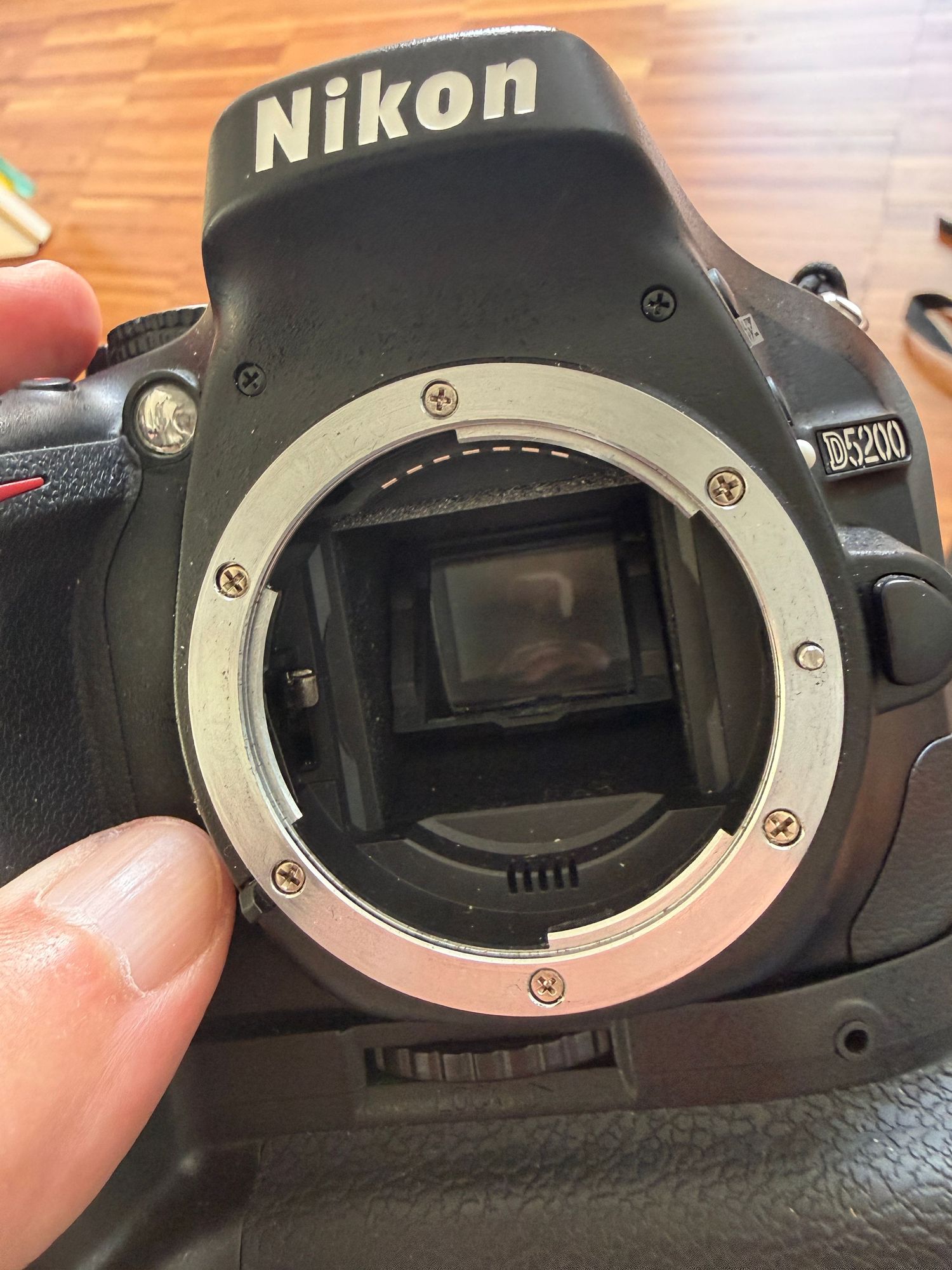
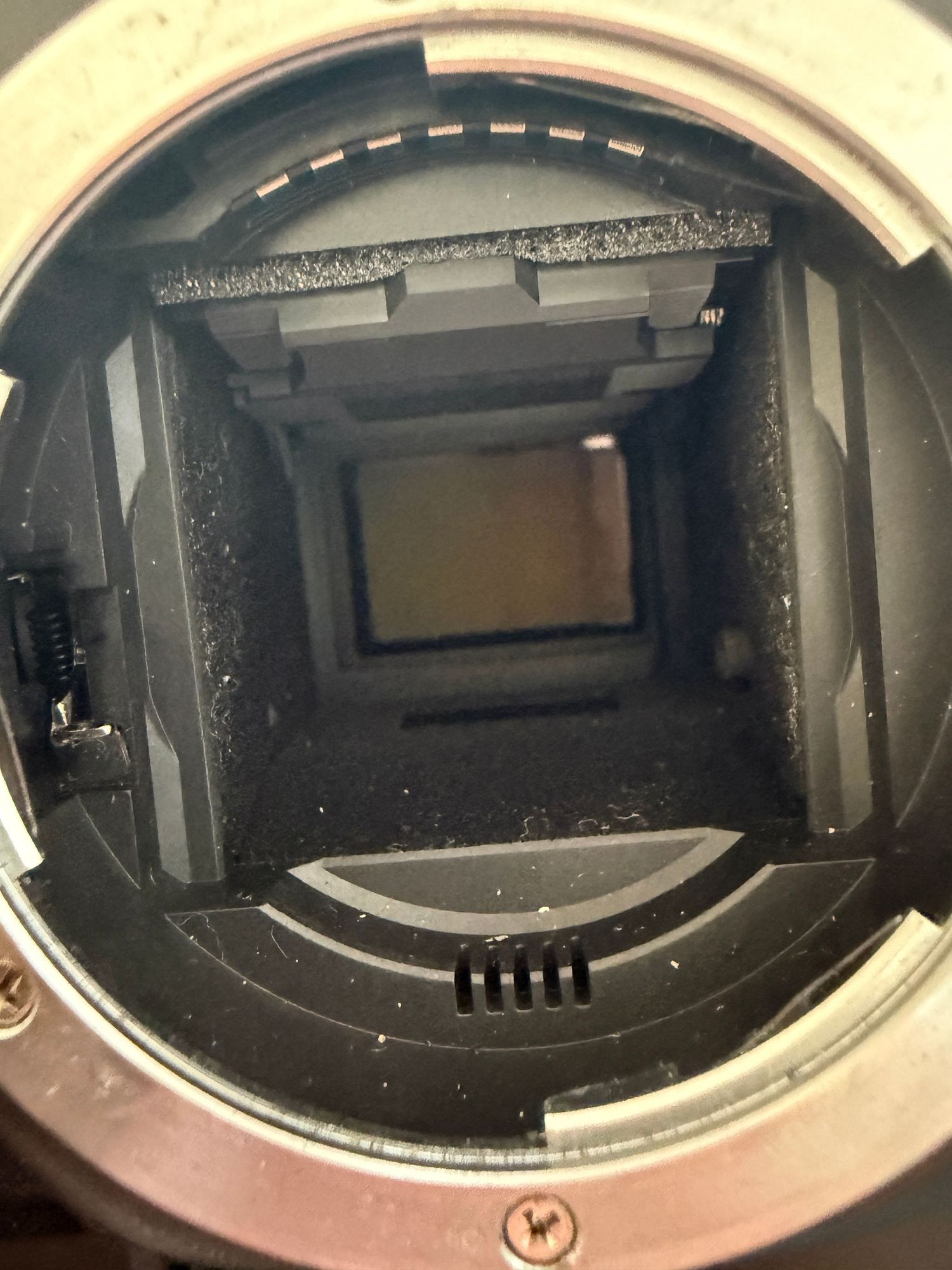
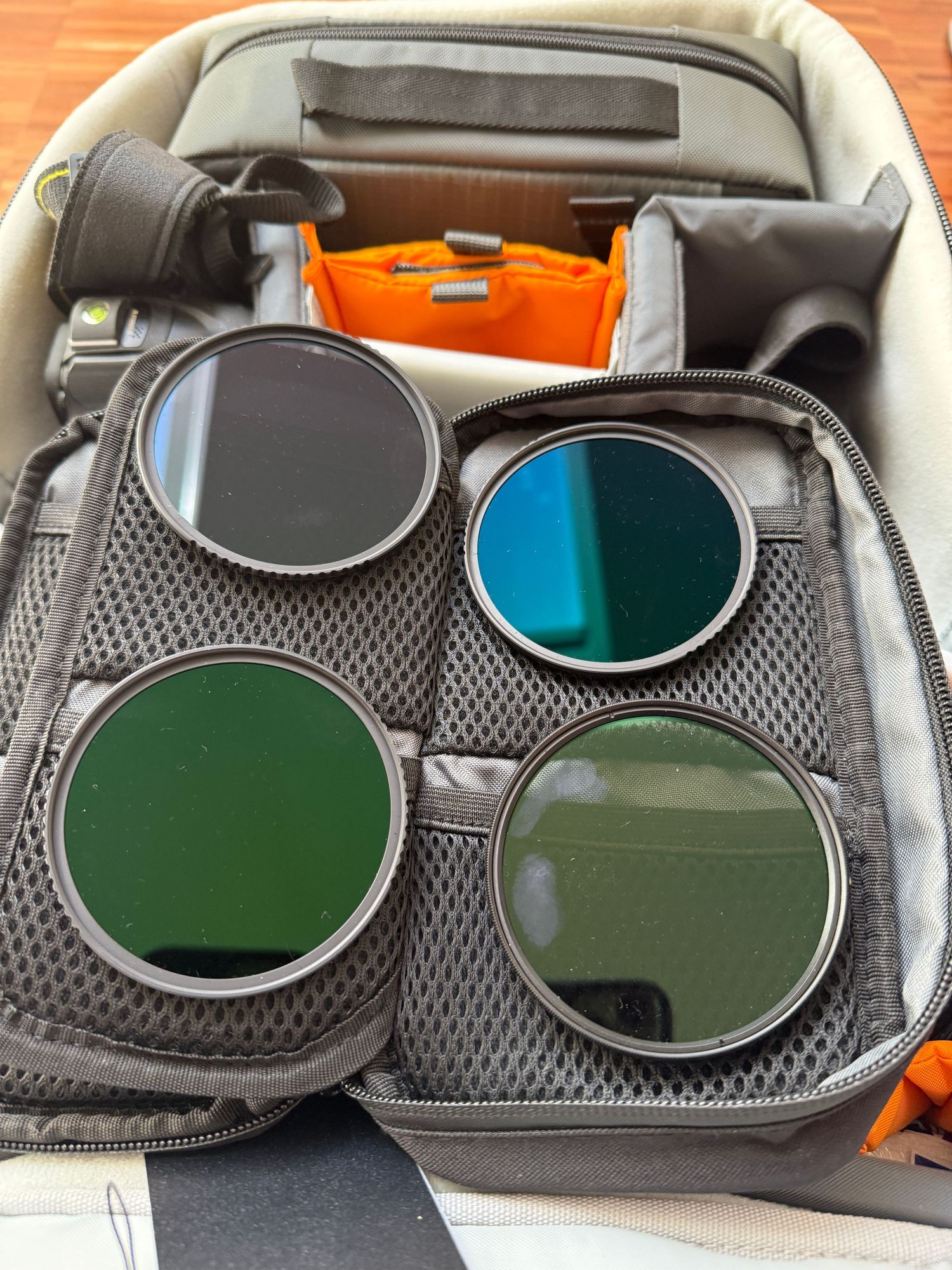
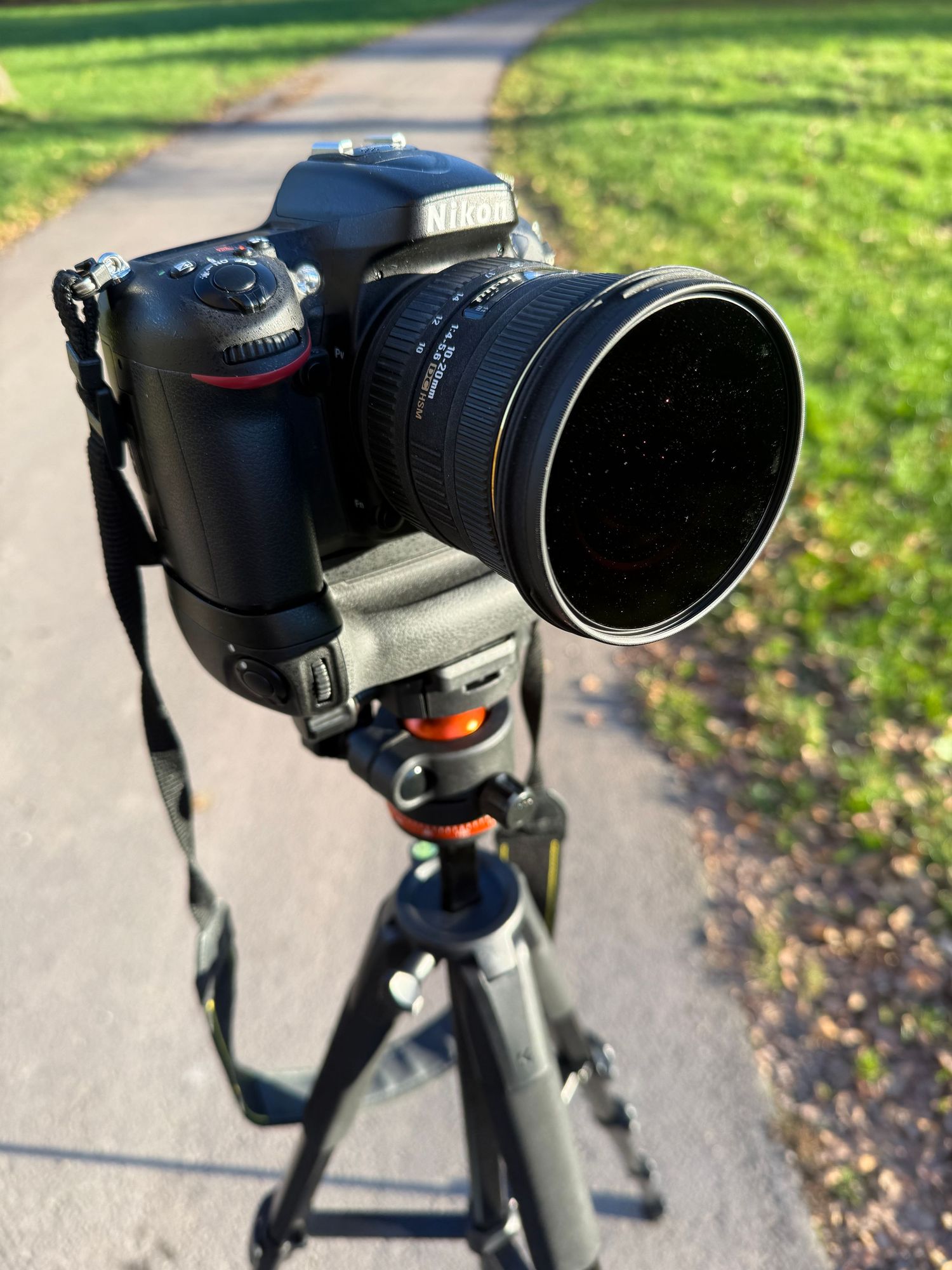
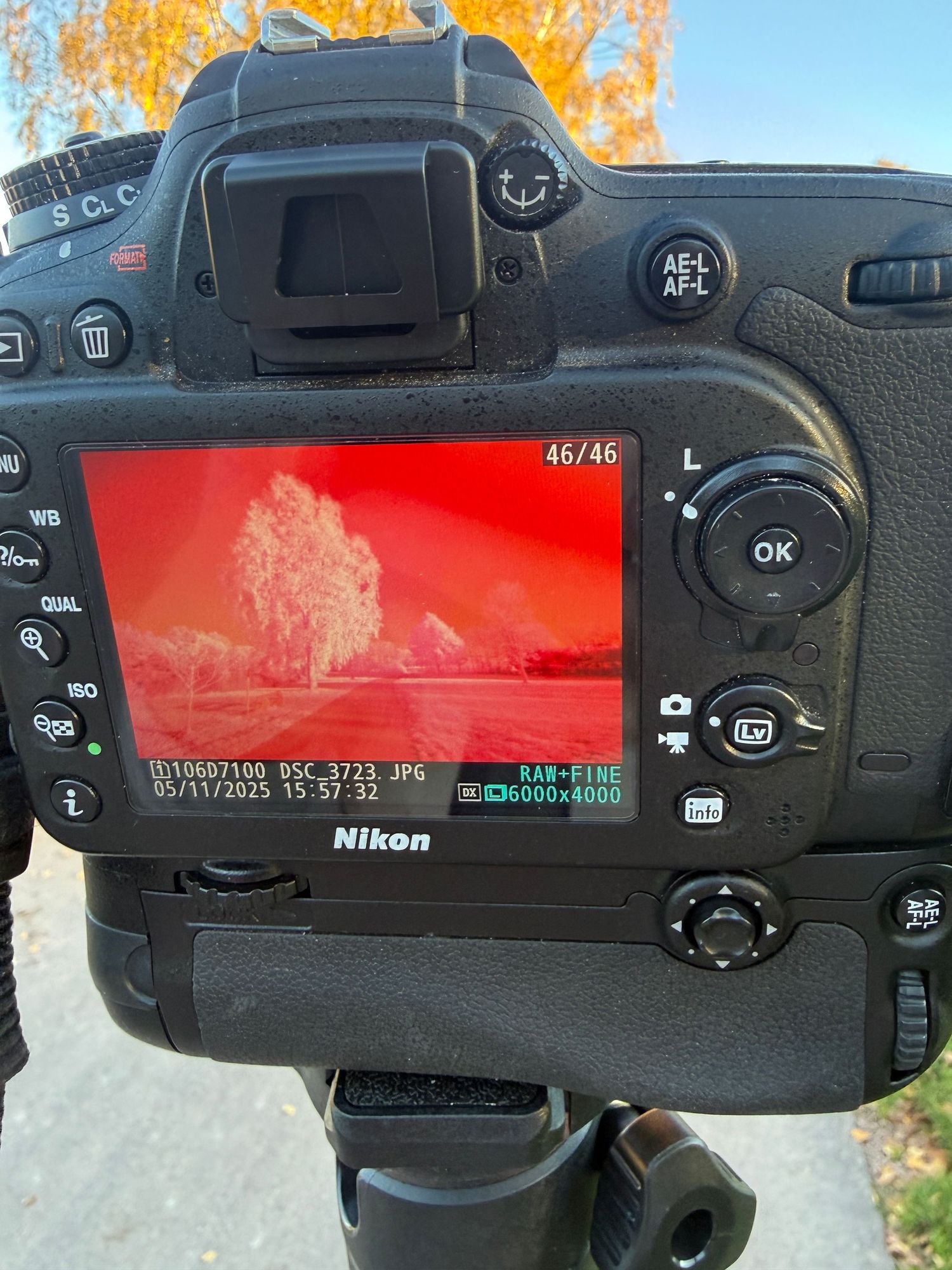
Infrared images can be captured using specially modified cameras or external filters that block visible light and allow only infrared wavelengths to pass. The final look can vary depending on the wavelength used (such as 590 nm, 720 nm, or 850 nm), each producing different levels of contrast and color interpretation.